sicim.feelindesign.com

Sustainability Report 2025

Looking
Ahead

A year shaped by global instability.
A growth that never stopped.

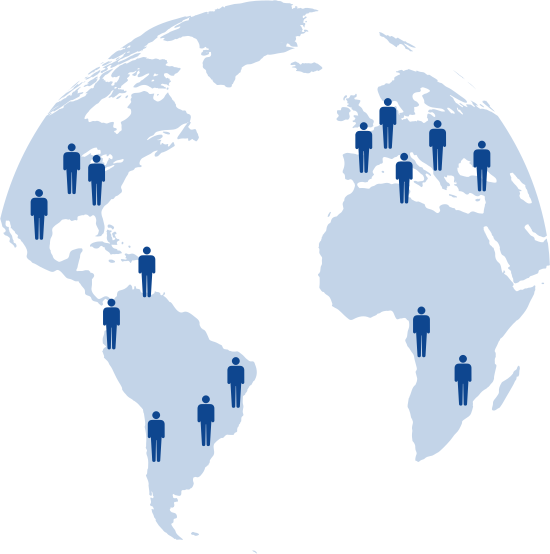
In a global context marked by conflicts, instability and profound transformations, SICIM has continued to grow, strengthening its project portfolio and its presence in strategic energy markets. Sustainability is not a separate track from this growth — it’s the strategic lever we use to navigate complexity, drive change, and turn an industrial approach into continuous cultural evolution. This page walks through what that meant in 2025: for our people, for the environment and the communities where we operate.

The year in numbers

2025 at a glance

2025 at a glance

190,654 MWh energy consumed

-18% vs 2024
90%

-14%

Group emission intensity for 2025

(ratio of Scope 1 and Scope 2 - Location-Based - emissions to net revenue)

63.36 tCO2e/million €

-14% compared with 2024
90%

6.841

people worldwide

25.53%
of turnover Taxonomy-eligible

Average client satisfaction

90%

7.77 /10

0
cases of corruption and bribery

01 — To our stakeholders

The strength of our business model

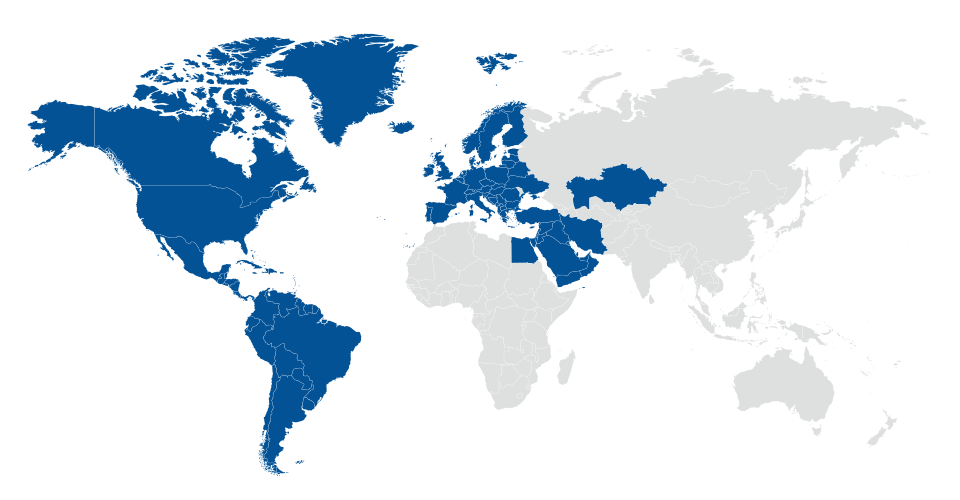
In 2025 we secured a number of significant new contracts. Large-scale projects were progressed across multiple regions worldwide — such as Kazakhstan, the Middle East, Europe and the Americas. In Italy, we carried out upgrading works on gas-fired power stations and progressed the development of part of the Adriatic Line.

Growth, for SICIM, has never meant standing still: even in a year shaped by conflict and instability, we kept strengthening our project portfolio and our presence in strategic energy markets around the world.

North & South AmericaThe AmericasLarge-scale projects progressed during 2025, alongside a number of significant new contracts. Strategic energy marketsEuropeLarge-scale projects progressed during 2025, alongside a number of significant new contracts. Strategic energy marketsKazakhstanLarge-scale projects progressed during 2025, alongside a number of significant new contracts. Strategic energy marketsMiddle EastLarge-scale projects progressed during 2025, alongside a number of significant new contracts. Gas-fired power & Adriatic LineItalyUpgrading works on gas-fired power stations and the development of part of the Adriatic Line.

Hover — or tap — a highlighted area to see what we progressed there in 2025.

A sustainable path

Sustainability for SICIM is a strategic lever to navigate complexity and drive change, an integral part of our development path. Alongside tools and processes, our industrial approach requires continuous cultural evolution: we invest in skills development and in the dissemination of ESG principles, because a resilient business model is one where growth and responsibility move together, not on separate tracks.

02 — Our value model

Quality, Client and Innovation

SICIM’s value creation model is based on a synergy between quality, client focus and the ability to innovate.

High standards of quality, safety and environmental protection are maintained throughout the entire project lifecycle through a Multisite Management System aligned with ISO 9001, ISO 45001 and ISO 14001 — the same three certifications that underpin how we run every site, everywhere we operate.

ISO 9001

Quality

ISO 45001

Health & Safety

ISO 14001

Environment

Our objective is not only to deliver measurable results, but also to continuously strengthen the processes that generate them.

This means systematically listening to clients, investing in research and development, digitalising operations and embedding innovation into day-to-day activities, so that improvements become scalable and repeatable across projects.

Client satisfaction

This approach is reflected in the evolution of our client satisfaction model. In 2025, we introduced a new 1–10 rating scale, enhanced the survey methodology and digitalised the feedback collection process, enabling more timely and meaningful insights to support continuous improvement.

As a result, the average client satisfaction score reached 7.77/10, confirming the effectiveness of a more structured and proactive engagement model.

7.77/10

average client satisfaction

90%

Research and development

Research and development sit at the cornerstone of this continuous improvement process. Rather than pursuing innovation as an end in itself, we focus on technologies that enhance safety, operational efficiency, environmental performance and data quality.

In 2025, this commitment translated into six flagship innovation projects:

01

AI-based person detection system

02

Electric pipe bending machine

03

Digitalisation of attendance tracking and productivity analysis

04

Aerial photogrammetric surveying and digitalisation of surveys

05

Advanced fully mechanised welding system for higher-quality welding

06

Development of a 56″ automated wrapping machine for field coating of weld joints

Research & Development

A continuous improvement

Reduction in GHG emissions

compared to the diesel configuration when using grid electricity

65,500 litres/year

of diesel saved

Reduction in noise emissions

10 dB(A)

from 112 to 102 dB(A)

Additional benefit

Improved working conditions and operator comfort

A digital attendance-tracking system that standardises data collection, accelerates information sharing and expands the availability of operational data for project management and performance analysis

Research & Development

Results achieved

15

projects using the digital tracking system

~7.7 million hours

worked recorded digitally

5,900

workers monitored

Over 61,000

digital reports collected

drone-based aerial surveying, enabling faster, safer and more comprehensive data collection, together with the continued digitalisation of surveying activities

In focus

Aerial photogrammetric surveying and digitalisation of surveys

In 2025 we expanded our use of aerial photogrammetric surveying systems using drones.

Drone surveying offers significant advantages in terms of data collection speed, greater coverage of the surveyed areas, data completeness and reduction in manual fieldwork. The use of drones also generates operational safety benefits, as it reduces the need for personnel to be present in vast, inaccessible or congested areas.

Aerial photogrammetric surveying and digitalisation of surveys recorded data

67

active users

8

managed sites

1,648

surveys carried out

436

designs uploaded

8,163

measurements created

Sites with the highest intensity of use

870+

surveys

185

designs

Over 4,900

measurements

Italy

Saudi Arabia

GPR WeldRunner

A new mechanised welding system for large-diameter gas pipelines incorporating sensors and monitoring devices that automatically adjust key welding parameters, improving quality consistency while increasing operator safety.

Automated wrapping machine

It removes manual exposure to risk during coating activities, while also increasing productivity and reducing material consumption.

Together, these initiatives demonstrate how innovation at SICIM is a structured process that transforms operational experience into practical solutions, creating value for clients, improving working conditions and supporting the Group’s long-term sustainability strategy.

Alongside innovation, we continued to strengthen cybersecurity by further integrating our corporate assets into the Security Operations Centre (SOC) and maintaining a structured approach based on advanced technologies, network segmentation and awareness programmes. This proactive process enabled us to record zero personal data breaches posing a risk to individuals’ rights and freedoms in 2025, confirming the effectiveness of our information security framework.

03 — People

People

People — irrespective of whether they are employees, collaborators or stakeholders of any kind — play a central role for us. We believe that creating a safe, inclusive and engaging workplace is essential to attracting, developing and retaining talent while supporting the long-term success of the Group.

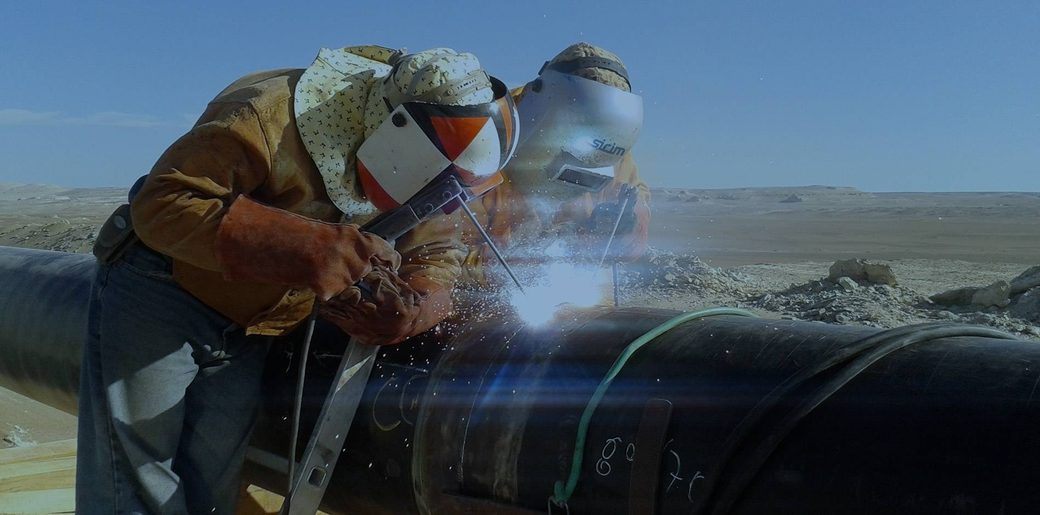
Working conditions are therefore a key priority. We continuously invest in occupational health and safety through a certified management system, advanced monitoring tools and extensive HSE training, while actively involving our people in risk prevention through initiatives such as Toolbox Talks, Workers’ Safety Representatives and near-miss reporting.

At the same time, we promote professional growth through structured training programmes, performance development processes and welfare initiatives designed to enhance employees’ skills and well-being. These actions are supported by continuous engagement activities that enable us to listen to our people and incorporate their feedback into decision-making and continuous improvement processes.

Equal opportunities, inclusion and respect for human rights complete this approach. In 2025, SICIM further strengthened its governance framework by adopting a new Anti-Bribery and Corruption Policy, alongside its existing Code of Ethics, Whistleblowing Policy, Gender Equality Policy and DE&I Policy.

This integrated approach translated into tangible results in 2025: the Group delivered more than 395,500 HSE training hours and over 15,300 professional training hours to employees, while maintaining a low injury rate of 1.2 per million hours worked (16 work-related injuries). In addition, SICIM recorded no serious incidents, formal complaints or public reports of human rights violations related to its workforce.

395,500+

HSE training hours delivered

15,300+

professional training hours

1.2

injury rate per million hours worked

0

reports of human rights violations

Our workforce

4,739 90%

men

5,262

employees worldwide

+10.6% vs 2024

523 10%

women

Across Kazakhstan, Iraq, Saudi Arabia, Italy, Mexico, Peru and Guyana

04 — Environment

Environment

SICIM is committed to integrating environmental responsibility into its business strategy and operations, in line with its corporate values and sustainability principles.

Climate change

The Group mitigates climate change through the “Beyond Carbon” pillar of its ESG strategy, aligned with the 1.5°C target of the Paris Agreement.

This translates into concrete actions — increasing the use of HVO biofuel across the fleet, expanding photovoltaic systems on site, implementing an ISO 50001-certified Energy Management System for SICIM SpA, systematically monitoring energy and fuel consumption, and activating renewable electricity supply contracts certified through Guarantees of Origin — which together drove the 18% reduction in total energy consumption and the rise in the renewable share of the energy mix in 2025.

Energy and emissions

190,654 MWh

total energy consumption

-18% vs 2024

driven by the ISO 50001 Energy Management System, fleet retrofitting and HVO biofuel adoption

12%

from renewable sources

3% in 2024

reflecting new photovoltaic installations and renewable electricity contracts (GO-certified). This increase is principally due to the usage of biofuels (HVO) which has grown by 207%.

88%

fossil fuels remains the Group’s primary energy source

29,729 kWh

electricity generated by photovoltaic systems at worksite

Emission intensity

Emission intensity

Scope 1 + 2
(Location-Based)/net revenue

63.36

tCO2e/million €

-14% vs 2024
90%

Scope 1 + 2
(Location-Based)/hours worked

3.47

tCO2e/h*1000

-27% vs 2024
90%

Both improvements stem from the combined effect of energy efficiency initiatives and the renewable electricity supply contracts.

Water management

It follows the same logic of continuous improvement: hydrotests recycle water during pipeline testing, keeping hydraulic-testing consumption to around 11% of the total; a recirculation system installed in the vehicle washing area at the Busseto headquarters cut water withdrawals in that process by over 50%; and water reuse for dust suppression and automated irrigation further reduce demand. These measures are the main driver behind the 76% drop in water discharges, while the rise in withdrawals mainly reflects a broadening of the reporting scope following an internal review of data-collection procedures, rather than an actual increase in use.

Through the Water Risk Atlas, SICIM identifies and monitors water risks throughout its operations, paying specific attention to contexts where water is a critical resource.

Water consumption

361,005

withdrawn

+4% vs 2024*

increase mainly due to a broadened reporting scope, not higher actual use

74,737

discharged

-76% vs 2024

result of the vehicle-washing recirculation system and hydrotest water recycling + other water recycling mechanisms described

Hydraulic testing accounts for ~11% of total consumption thanks to water recycling mechanisms

of total consumption is due to water stress

Biodiversity

SICIM applies a mitigation hierarchy — avoid, reduce, restore, offset — across every site, supported by environmental restoration plans, monthly HSE inspections, and monitoring of operating expenditure allocated to restoration activities.

Avoid

Reduce

Restore

Offset

Resource use

Our Waste Management procedure is built around prevention and minimisation, reuse/recycling/recovery, and responsible disposal. Material inflows are tracked by weight through the JD Edwards ERP system, supporting the 9-percentage-point increase in reused/recycled secondary components. On the outflow side, waste is segregated in temporary storage areas and handed to authorised third parties for disposal or recovery; the increase in total waste is mainly attributable to non-hazardous waste, while the 76% decrease in hazardous waste reflects tighter operational controls upstream.

Resource inflows and outflows

Total materials used at corporate level, tracked via JD Edwards ERP

121,768

tonnes

90%

Reused or recycled secondary components

22.48%

+9 pp vs 2024

reflecting the circularity measures under the Waste Management procedure

Waste

up vs 2024, mainly non-hazardous waste

135,841

tonnes

90%

Hazardous waste

down 76%

reflecting tighter prevention and control measures

10%

of waste sent for recovery

(a decrease vs 2024)

61%

of recovered waste is recycled

60%

of waste (hazardous and non-hazardous) sent to other disposal operations, followed by landfill and incineration

05 — Communities

Communities

Our company operates with respect for local and national communities and contributes to promoting sustainable development, recognising our impact on the local environment, on economic and social development, and on overall well-being.

Engagement with local communities is structured through dedicated channels — a materiality questionnaire to assess relevant topics, and a whistleblowing channel accessible via the company website for reporting concerns and negative impacts — within a framework guided by our Code of Ethics and by the UN Global Compact’s Ten Principles.

In 2025 this took shape through initiatives across three areas:

01

Health protection

A Breast Cancer Awareness Day in Busseto — offering preventive screening for breast and cervical cancer to both employees and the local community — and a parallel awareness initiative in Saudi Arabia.

02

Culture, community and sport

Our support of the Verdi Festival and the University of Parma’s Career Day; and, for community relationships and sport, from La Notte delle Streghe and Imprese Aperte Parma to the Corporate Wellness Games, the Olimpiadi Verdiane and our ongoing collaboration with Accademia Vomano.

03

Safety and environmental culture

Safety Day, SICIM Junior for local schoolchildren, the Changemaker Competition with InVento Innovation Lab, and the SICIM ESG Activator training programme open to all personnel worldwide.
Measurable value

The value of these initiatives is measurable: the Breast Cancer Awareness Day in Italy alone preserved 80 working hours (valued at €2,352, based on €29.4/hour) and generated an estimated €2,080 in avoided healthcare costs through early diagnosis, while also avoiding 273.6 kg of CO₂ emissions from travel — together producing a Social Return on Investment (SROI) of 2.76.

Community impact

Over €150,000

invested to support sporting, cultural and social initiatives in the Busseto area

SROI = 2.76

on the Breast Cancer Awareness Day initiative

(€2.76 of social return for every €1 invested, driven by preserved working hours, avoided healthcare costs and avoided travel emissions)

16

employees reached through cancer prevention services

80

working hours preserved

273.6 kg

of CO2 emissions avoided from travel

06 — Governance

Governance

Ethical and responsible business conduct, the protection of people and human rights, and a transparent corporate culture are central to how we operate, together with resilient supply chains, robust risk management, and high standards of cybersecurity and data protection.

Our Code of Ethics and Model 231 define the principles and controls that guide everyone acting on SICIM’s behalf, including directors, employees, suppliers and collaborators. In 2025, we strengthened our governance framework by adopting a Group-wide Anti-Bribery and Corruption Policy, advancing our Human Rights Due Diligence programme, and enhancing our whistleblowing system to ensure that any suspected misconduct can be reported and addressed promptly. SICIM is also listed in the “White List” of companies not subject to risks of infiltration by organised crime.

Looking ahead, we are introducing an ESG induction programme for the Board of Directors, integrating ESG metrics into management assessment, strengthening ESG risk management and supplier engagement, and extending our Supplier Code of Conduct with a structured ESG supplier assessment system, sustainability audits and dedicated procurement training.

0

confirmed cases of corruption or bribery

60 days

standard payment terms

07 — EU Taxonomy

EU Taxonomy

The European Taxonomy (Regulation (EU) 2020/852) is the European Union’s reference framework for classifying environmentally sustainable economic activities and a key pillar of the Sustainable Finance Action Plan and the Green Deal. It defines six environmental objectives — from climate change mitigation and adaptation to the sustainable use of water, the transition to a circular economy, pollution prevention and the protection of biodiversity — and provides a common methodology to assess the eligibility and alignment of economic activities, increasing transparency for investors and stakeholders.

In 2025, SICIM completed a preliminary assessment of its economic activities under the Taxonomy, focusing on eligibility and calculating the three financial KPIs required by the Regulation: Turnover, CapEx and OpEx. This first assessment represents an important step in our alignment with EU sustainability reporting requirements. All of SICIM’s Taxonomy-eligible activities relate to the environmental objective of climate change mitigation, spanning electrical transmission and distribution equipment, solar photovoltaic generation, renewable and low-carbon gas networks, and low-emission vehicle transport.

of turnover Taxonomy-eligible, from Hydrogen-Ready pipeline construction

This figure is attributable to the construction of Hydrogen-Ready pipelines.

Taxonomy-eligible CapEx

Primarily relates to investments in EV charging infrastructure, photovoltaic systems and the company’s Euro 5–Euro 6 compliant vehicle fleet.

08 — Future steps

Future steps

This report shows where we have arrived, but our journey continues.
The next steps of our ESG strategy are clear and mapped out:

Governance

An ESG induction programme for the Board of Directors and a new ESG risk category within our Company Risk Register. The aim is to keep on developing the sustainability framework.

Environment

A dedicated decarbonisation plan.

People

Training programme focused on mental well-being and an in-depth Gender Pay Gap analysis.

Clients

A higher-frequency, more digitalised client satisfaction survey process.

The six strategic pillars of our sustainability framework

1

Integrity and transparency

2

Beyond carbon

3

Nature regeneration

4

Value creation

5

People and communities

6

Safety in operations

1

Integrity
and transparency

2

Beyond
carbon

3

Nature
regeneration

4

Value
creation

5

People
and communities

6

Safety
in operations

In SICIM sustainability keeps moving forward the same way our projects do — one deliberate step at a time.

Torna in alto